



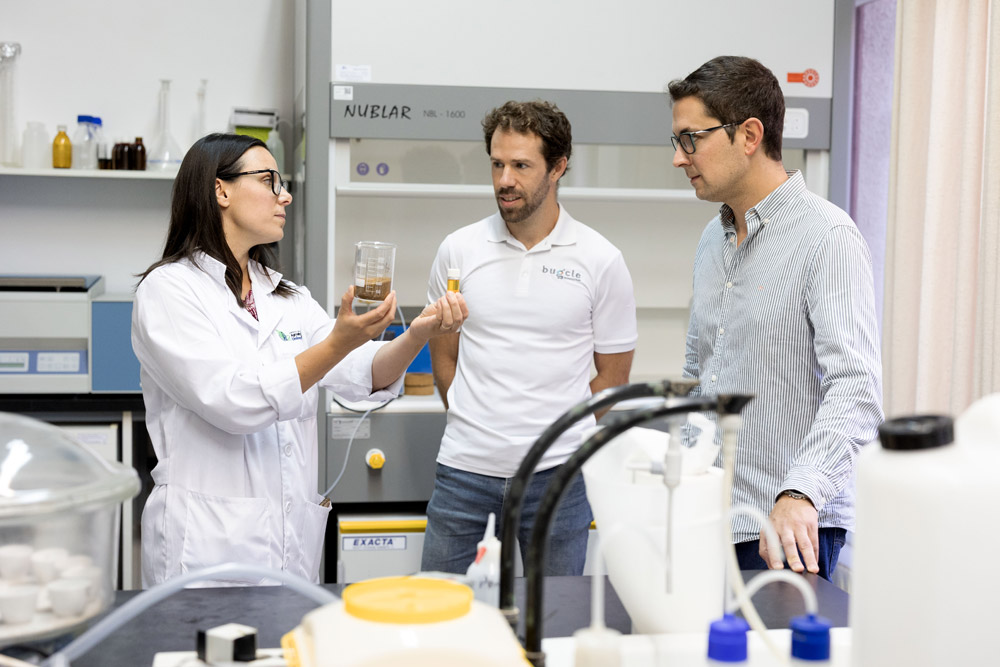
A study carried out by the University of Zaragoza and Bugcle aims to determine whether this natural by-product can enhance the nutritional profile of Tenebrio molitor, an insect highly valued in animal nutrition.
The project also involves JustBug, which provides insect breeding services, and the Agri-Food Research and Technology Centre of Aragon (CITA).
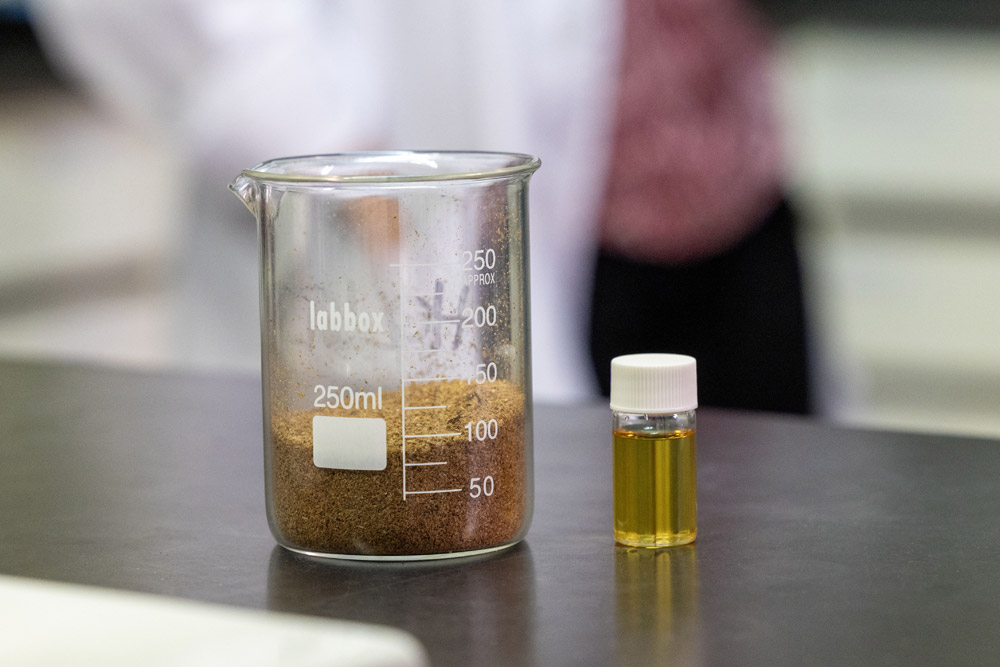
Bodega Sommos, in collaboration with the Faculty of Health and Sports Sciences at the University of Zaragoza and the Aragonese company Bugcle Bioindustrias, is dedicated to promoting the circular economy by utilizing natural grape resources. Their joint research focuses on grape pomace and the Tenebrio molitor beetle. “Tenebrio molitor, also known as the mealworm, has long been used in animal feed, for example, in fish farming diets. Researchers are studying whether adding grape pomace can improve its nutritional profile. At Sommos, we have provided pomace that is usually discarded after harvest, allowing it to be used in experimental feed formulations. Pomace is the solid material left after pressing the grapes, typically containing skin, pulp, stems, and seeds. With this initiative, we reinforce our commitment to the circular economy and waste recovery while contributing to a project that seeks to make the agri-food sector more sustainable,” explains Diego Mur, Marketing Director at Sommos.
The pomace will be mixed with dehydrated yeast and carrot, allowing researchers to assess the impact of this feed composition on the larvae, from which oils and flours are commonly obtained. The results of the project—set to continue until November—could have significant implications for both animal production and the efficient use of natural resources. “We will also explore the potential use of Tenebrio molitor by-products for human consumption, given their antioxidant capacity and favorable lipid profile,” notes Montserrat Martínez, the project’s lead researcher.
The project, titled Study of the Physicochemical and Nutritional Properties of Oils and Flours Derived from Tenebrio molitor Larvae and the Impact of Including Agri-Food Industry By-Products in Their Diet, is funded by the University of Zaragoza. It also involves researchers from CITA and several industry partners: Bugcle Bioindustrias, responsible for breeding, feed design, and processing the insects into oils and flours, and JustBug, which provides insect breeding services.
This initiative reflects Sommos’ commitment to innovation and sustainability, in line with Grupo Costa’s goals of finding agri-food sector solutions to global challenges in waste management and sustainable nutrition.
At Bodega Sommos, this commitment also takes shape through internal initiatives aimed at optimizing the production chain — such as the development of proprietary yeast combinations that provide wines with unique profiles and enhance their quality — and through collaboration with companies, organizations, and institutions that foster scientific progress within the industry.


